
The Yamunotri Trek: Janki Chatti to the Temple, Step by Step
The Yamunotri walk is about 6 km from Janki Chatti. How long it takes, where it gets steep, the pony and palki options, and why Barkot is the night before.
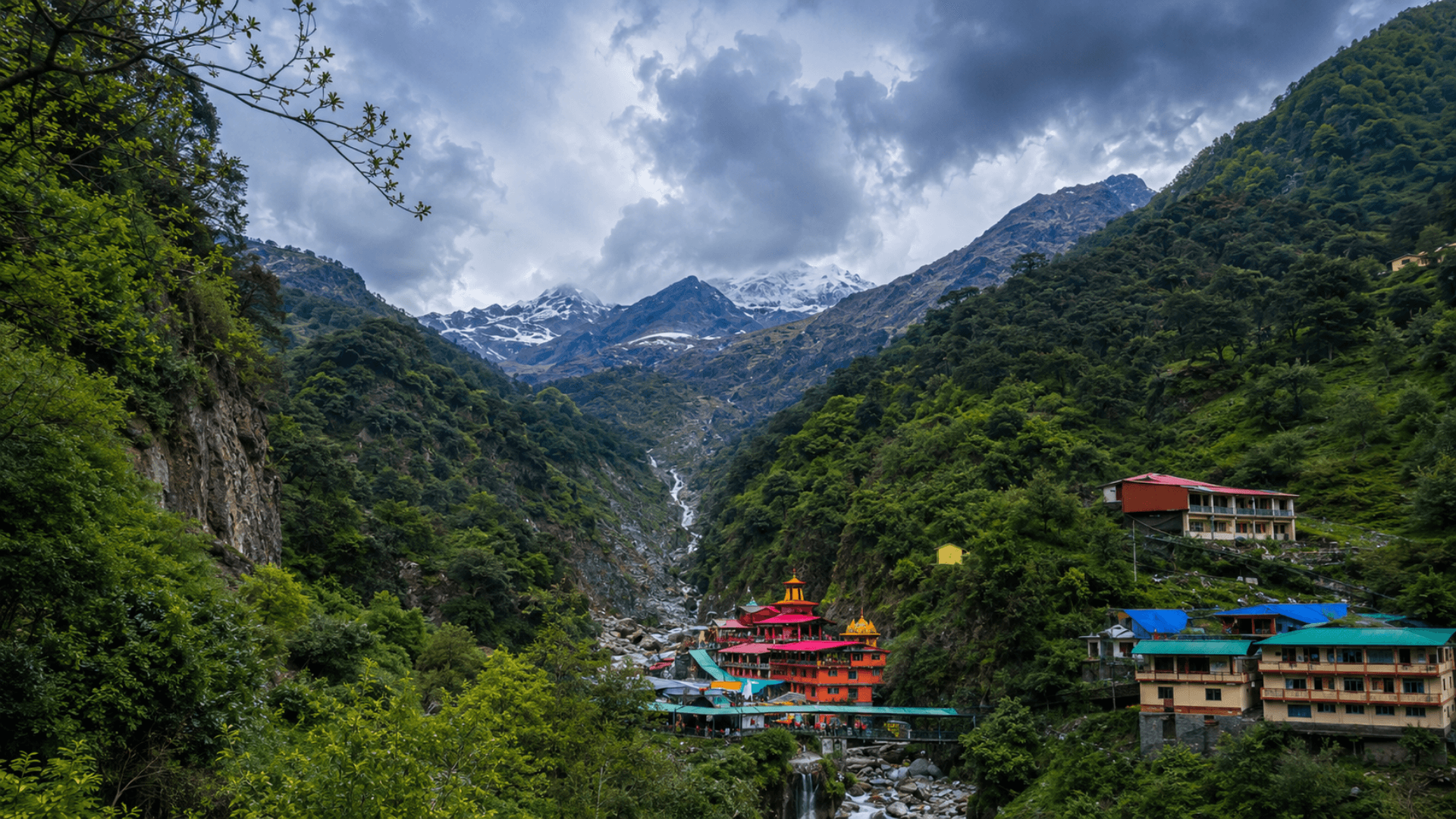
Yamunotri is the first shrine on a traditional Char Dham, and it is not reachable by road. The road ends at Janki Chatti, and from there it is a walk of about 6 km up the Yamuna gorge to the temple, which stands at roughly 3,290 m.
Six kilometres sounds short. It is also a steady climb of several hundred metres, most of it in the second half, on a path shared with ponies, palkis and thousands of other pilgrims on a busy morning. This is how the day actually runs.
Where to sleep the night before
Almost everyone starts from Barkot. It is about 45 km from Janki Chatti — an hour and a half to two hours on a winding road through Syana Chatti and Hanuman Chatti — and it has the widest choice of beds on this side of the circuit. There are guesthouses closer in, at Syana Chatti, Hanuman Chatti and Janki Chatti itself, which save you the morning drive, but they are simpler and fill first in peak weeks.
Our guide to staying in Barkot covers which part of town suits an early start. The short version: leave Barkot before first light and you are on the path while it is still cool and quiet.
The route, section by section
Janki Chatti: the road head
Vehicles stop here. This is where the pony, palki and pitthu counters are, and where your yatra registration can be checked — carry it on your phone and on paper, because the network is unreliable (our registration guide explains how it works). Across the river is Kharsali, the village where the goddess Yamuna spends the winter after the temple closes.
The first half: steady
The path is paved and railed. It climbs steadily rather than steeply at first, with tea stalls every few hundred metres and the river loud below. Walkers who start early usually find this part pleasant.
The second half: steep
The last couple of kilometres decide the day. The gradient sharpens, the path narrows in places, and by late morning it is at its most crowded, with ponies coming down as pilgrims go up. Keep to the hill side of the path, not the drop side, and step in to let animals pass.
At the temple
Beside the temple is Surya Kund, a hot spring hot enough that pilgrims tie rice or potatoes in a cloth, cook them in it and take them home as prasad. Worship is offered at the Divya Shila, a rock pillar, before darshan. There are hot-water pools for bathing, which after the climb are the best part of the day for many people.
How long it takes
Most reasonably fit walkers take three to four hours up and two to three down, not counting time at the temple. Older pilgrims and anyone new to altitude should allow five hours up and not feel bad about it. Plan the whole day for Janki Chatti and back, and aim to start down by early afternoon: in the monsoon months rain usually comes later in the day, and the path is slower wet.
Walking, pony, palki or pitthu
- Walking is what most people do and is the right choice for anyone reasonably fit. Good shoes matter more than fitness.
- Pony takes the climbing out of it but not the discomfort — the ride down is jolting. Hire only at the official counters and agree everything before you set off.
- Palki or dandi, a chair carried by four porters, is the usual choice for elderly pilgrims and anyone with a knee or heart problem.
- Pitthu, a basket carried on a porter's back, is used for small children and light adults.
Rates for all of these are fixed by the local administration and displayed at the counters. They change from season to season, so we do not print them here.
What goes wrong
- Starting late. A mid-morning start from Janki Chatti puts you on the steep half in the heat and the crowd, and on the way down in the afternoon rain.
- Treating it as a stroll because it is only 6 km. The temple is at nearly 3,300 m. Walk slowly, drink water, and read our note on altitude on the Char Dham if anyone in your group has not been this high before.
- New shoes. The paved surface is hard on untested footwear, and the descent is where blisters happen. Our packing list covers what actually gets used.
- Driving on to Uttarkashi the same day. It can be done with a very early start, but after the walk it is a long, tiring drive. Most itineraries sleep a second night in Barkot and cross to Uttarkashi the next morning.
Where Yamunotri fits in the yatra
Yamunotri usually comes first, then Gangotri, then Kedarnath and Badrinath — the order our Yamunotri and Gangotri guide explains. It makes a good first test: a real walk at real altitude, but shorter and lower than Kedarnath. If the Yamunotri day goes badly, that is useful to know before you commit to Kedarnath's 16 km.
Before you go
- The road ends at Janki Chatti; the temple is about 6 km on foot from there.
- Sleep in Barkot the night before and leave before first light.
- Allow three to four hours up and two to three down, more for older pilgrims.
- Carry your yatra registration on your phone and on paper.
Good to know
- Pilgrims cook rice and potatoes in the Surya Kund hot spring and take them home as prasad.
- In winter the goddess Yamuna is carried down to Kharsali, the village across the river from Janki Chatti.
- The temple stands at roughly 3,290 m, the second highest of the four Char Dham shrines after Kedarnath.
- Worship at the Divya Shila rock pillar comes before darshan.
Frequently asked questions
How far is Yamunotri temple from Janki Chatti?
About 6 km on a paved path. Janki Chatti is the last point you can reach by road, so everyone covers this stretch on foot, on a pony, in a palki or in a pitthu.
How long does the Yamunotri trek take?
Most fit walkers take three to four hours up and two to three hours down, plus time at the temple. Older pilgrims should allow around five hours up. Start early and plan to be heading down by early afternoon.
Is the Yamunotri trek difficult?
It is moderate. The path is paved throughout, but the second half is steep and the temple is at nearly 3,300 m. Anyone who walks regularly can manage it at a slow, steady pace; ponies and palkis are there for those who cannot.
How far is Barkot from Janki Chatti?
About 45 km, which takes an hour and a half to two hours on a winding mountain road through Syana Chatti and Hanuman Chatti. That is why most pilgrims sleep in Barkot and leave before dawn.
Can elderly pilgrims do the Yamunotri trek?
Yes, with help. A palki carried by porters or a pony takes the climbing out of it. The altitude still applies, so anyone with heart or lung conditions should talk to their doctor before the yatra.
Need a room on this route?
Every property on Pulp Hotels is verified before it goes live.