
Altitude on the Char Dham Yatra: The Numbers, and What to Do About Them
All four shrines sit above the height where thin air starts to matter. The itinerary decides how hard that lands on you.
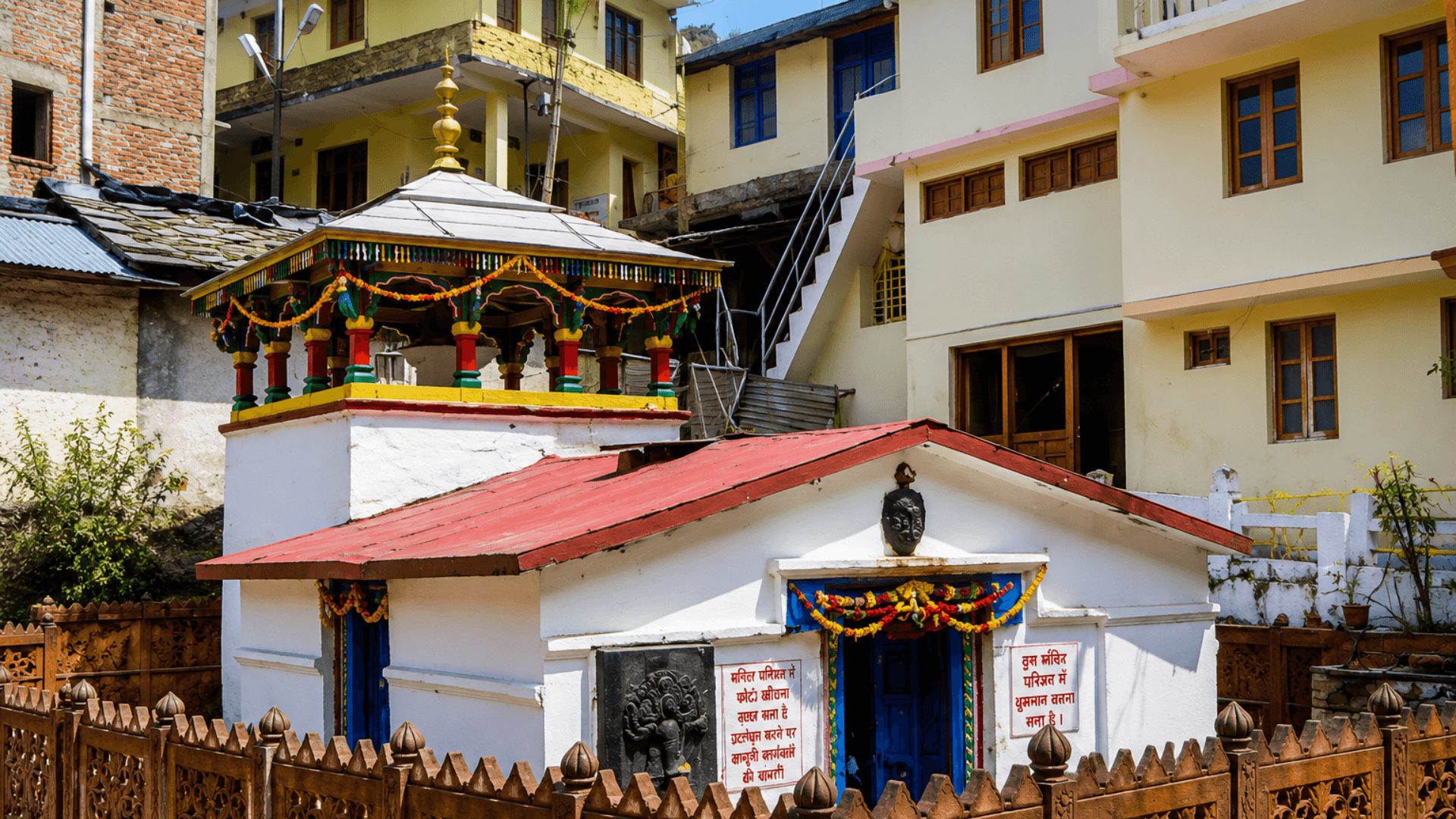
Every one of the four shrines sits above 3,000 m. Acute mountain sickness — AMS — generally starts becoming a possibility from around 2,500 m, so the entire Char Dham circuit takes place in the zone where it is on the table. That is not a reason to worry about the yatra. It is a reason to plan the itinerary rather than accept whichever one a package hands you.
The heights, in one place
- Kedarnath — roughly 3,580 m (about 11,750 ft). The highest of the four, and the only one reached by a 16 km climb.
- Yamunotri — roughly 3,290 m (about 10,800 ft), a 6 km climb from Janki Chatti.
- Gangotri — roughly 3,100 m (about 10,200 ft), motorable to the temple.
- Badrinath — roughly 3,100 m (about 10,200 ft), also motorable.
Notice that being able to drive there changes nothing about the air. Badrinath and Gangotri are easy to reach and still high, which is why people who breezed through both can still struggle at Kedarnath — they arrived without having done any work.
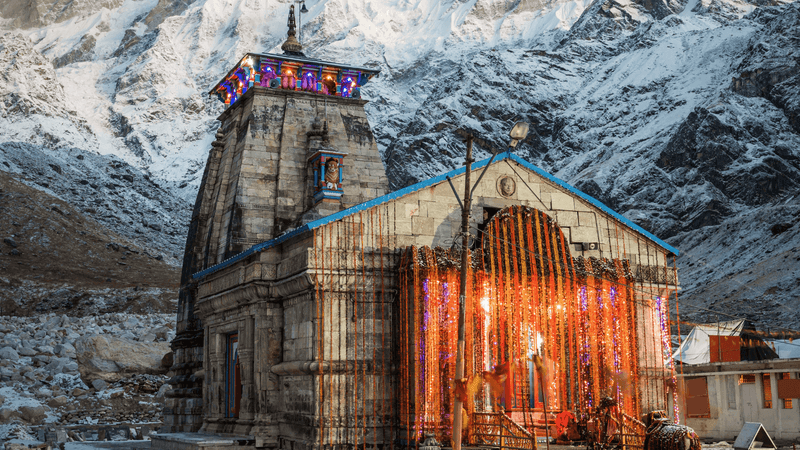
Why the Char Dham is harder on the body than the heights suggest
Three things stack up:
You gain height fast. Haridwar is at about 300 m. Within a few days you are at 3,500 m. In trekking terms that is a rapid ascent profile, and it is dictated by the road rather than by anyone's physiology.
You go up and down repeatedly. The circuit climbs to a shrine, drops to a valley town, crosses a ridge, climbs again. That sawtooth is easier than staying high, but it means you never fully acclimatise either.
You are tired before you start climbing. Long mountain drives, early starts and broken sleep all reduce what your body has left for the altitude. Fatigue and AMS feel similar enough that people misread one as the other.
What AMS actually feels like
Most commonly a headache, and with it some combination of nausea, loss of appetite, dizziness, unusual breathlessness at rest, and a night of genuinely bad sleep. Mild AMS is common and usually settles if you stop climbing and give it a day.
The signals that are not mild — confusion, a stumbling walk, breathlessness that does not settle when you rest, a persistent cough — are different in kind, not degree. The response to those is to go down, immediately, and get medical help. Descent is the treatment that works; nothing else reliably substitutes for it.
This is general information rather than medical advice. If you have heart or lung conditions, are pregnant, or take regular medication, talk to your own doctor about this trip specifically, well before you book. Uttarakhand has run health screening on the yatra routes in recent seasons and advised exactly this for at-risk pilgrims.
Planning choices that do most of the work
Sleep low
The oldest rule in altitude travel is climb high, sleep low, and the Char Dham lets you follow it almost by accident — if you choose to. Guptkashi sits well below Kedarnath and is the standard base for exactly this reason. Joshimath does the same job for Badrinath. Given a choice between a bed near the shrine and one lower down the valley, take the lower one.
Do it in the traditional order
Yamunotri, Gangotri, Kedarnath, Badrinath is not only tradition — it also happens to work as an acclimatisation ramp. You spend several days in the 2,000-3,300 m range on the western half before Kedarnath asks anything serious of you. Reversed itineraries put the highest and hardest shrine early, when you are least adapted.
Give the yatra enough days
Ten to twelve days rather than seven. The extra days are acclimatisation whether or not anyone labels them that. A compressed itinerary is, in altitude terms, a faster ascent profile.
Break the approach
Arriving in Dehradun or Haridwar and sleeping before day one is worth more than it sounds. So is treating the night in Barkot or Harsil as rest rather than a stopover to be shortened.
On the mountain
- Walk slower than feels natural. The people who struggle on the Kedarnath trek are disproportionately the fit ones who set off fast.
- Drink steadily. Dry air and exertion dehydrate you faster than the cold suggests.
- Eat, even without appetite. Losing interest in food is an early altitude sign, and skipping meals makes everything else worse.
- Skip alcohol, and be careful with sleeping pills — both blunt breathing at the exact moment you need it.
- Do not climb with a headache that is getting worse. Stop, rest, and descend if it does not clear.
- Stay together. AMS is easier for someone else to spot than for the person having it.
On the medication question — there are drugs used for altitude prophylaxis, and whether any of them is appropriate for you is a conversation with a doctor, not something to settle from a travel article.
The helicopter is not a way around altitude
It is a way around the walk, which is a real benefit and a different one. Flying from the valley floor to roughly 3,580 m in minutes is the fastest possible ascent, and you still have a short uphill walk from the helipad to the temple. Pilgrims who fly up, feel unwell and fly straight down are not unusual. If anything, plan the heli day with more care about how you feel, not less.
Season matters too
Cold makes altitude harder work. The opening fortnight in late April and early May can still be genuinely wintry high up, and the same is true from late October. Mid-May to mid-June and September to mid-October are the kindest windows, which happen to be the ones our best time to visit guide recommends for entirely separate reasons.
None of this is a reason to skip the yatra. Tens of thousands of ordinary, unathletic people complete the Char Dham every season. They mostly do it by going slowly, sleeping low and giving it enough days — which is the whole of the advice above, compressed.
Before you go
- All four shrines are above 3,000 m; Kedarnath is the highest at roughly 3,580 m.
- Sleep low — Guptkashi rather than higher up, Joshimath rather than Badrinath.
- A worsening headache with nausea means stop climbing; confusion or breathlessness at rest means descend now and get help.
- Talk to your own doctor before booking if you have heart or lung conditions, are pregnant, or take regular medication.
Good to know
- Haridwar sits at about 300 m; the Char Dham takes you to 3,580 m within a few days of leaving it.
- Gangotri and Badrinath are motorable and still above 3,000 m — road access does not lower the altitude.
- The traditional west-to-east order doubles as an acclimatisation ramp before Kedarnath.
- Descent is the one treatment for altitude sickness that reliably works.
Frequently asked questions
What is the altitude of the Char Dham shrines?
Kedarnath is roughly 3,580 m (about 11,750 ft), Yamunotri about 3,290 m, and Gangotri and Badrinath both around 3,100 m. Every one of them is above the height at which altitude sickness becomes possible.
Is altitude sickness common on the Char Dham Yatra?
Mild symptoms are fairly common, particularly at Kedarnath — headache, poor sleep, loss of appetite, breathlessness on exertion. They usually settle if you stop climbing and rest. Severe symptoms are far rarer and require immediate descent and medical help.
How do I avoid altitude sickness on the Char Dham?
Give the yatra ten to twelve days rather than seven, follow the traditional west-to-east order so you acclimatise gradually, sleep in the lower valley towns rather than beside the shrines, walk slowly, drink steadily and skip alcohol.
Does taking the Kedarnath helicopter avoid altitude problems?
No. It avoids the 16 km walk, which is a genuine benefit, but flying from the valley floor to 3,580 m is the fastest possible ascent and there is still a short uphill walk to the temple. Plan that day with more attention to how you feel, not less.
Which Char Dham shrine has the highest altitude?
Kedarnath, at roughly 3,580 m. It is also the only one that requires a 16 km climb, which is why it accounts for most altitude trouble on the circuit.
Need a room on this route?
Every property on Pulp Hotels is verified before it goes live.