
Rishikesh Before the Char Dham: Aartis, Ghats and a Day to Prepare
How to spend a day in Rishikesh before driving into the mountains — the two evening aartis, the bridges and ghats, Neelkanth Mahadev, rafting seasons, and the practical jobs to finish first.
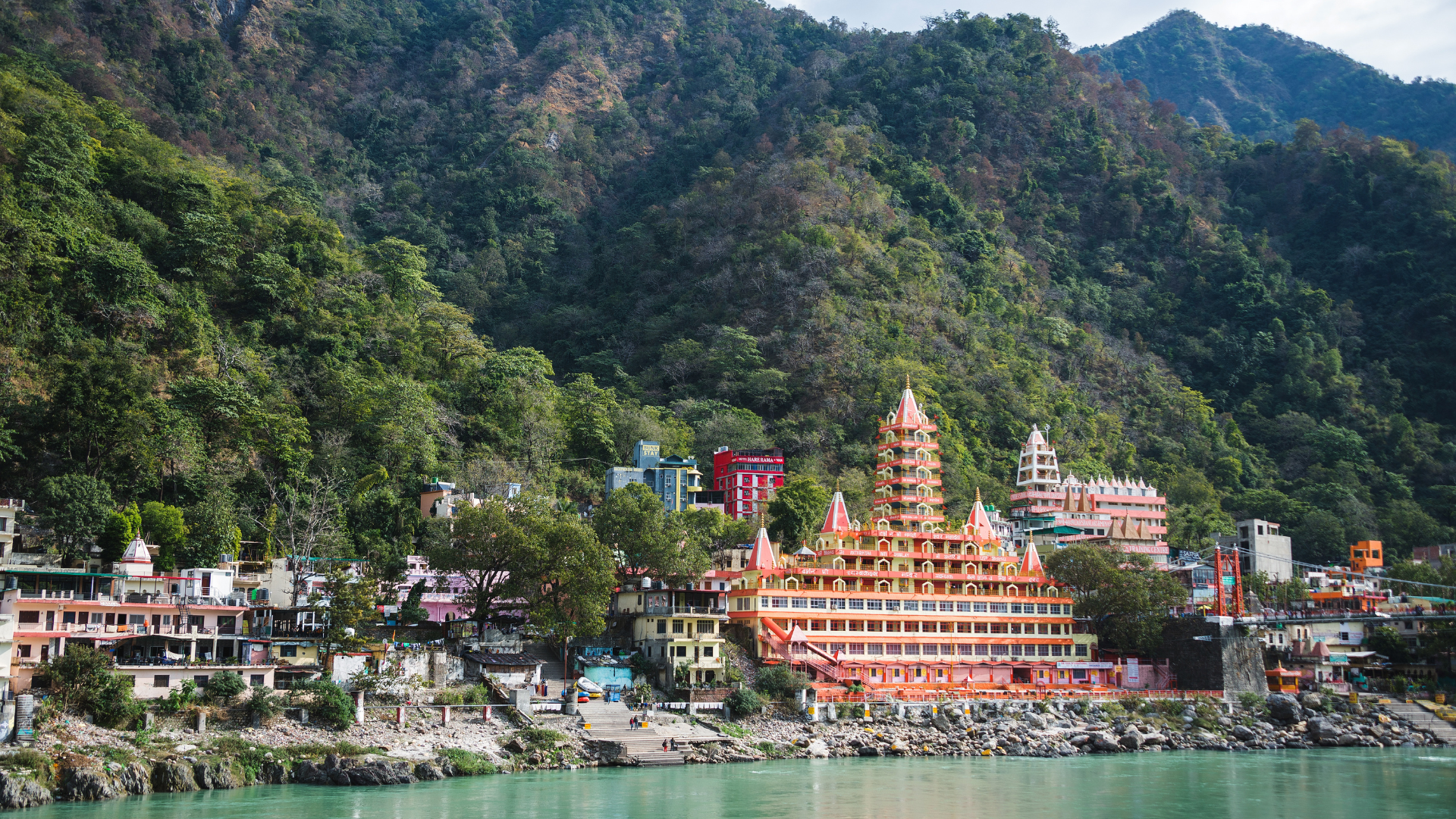
Rishikesh is the gateway to the Garhwal Himalaya. Every road to Yamunotri, Gangotri, Kedarnath and Badrinath passes through or near it, and many pilgrims spend a night here before the climb begins. A single spare day in Rishikesh is well spent: you can see the town at its best, and also finish the practical jobs that are much harder once you are in the hills.
The evening aartis
Rishikesh has two well-known evening aartis, both held around sunset, so the time shifts through the year.
- Parmarth Niketan, on the Swarg Ashram side of the river, holds its aarti on a ghat facing a large Shiva statue in the water. It is organised, with singing led by the ashram's students, and very popular — arrive early to get a place on the steps.
- Triveni Ghat, in the main town, is the larger public ghat and the traditional bathing place. The aarti here is closer in feel to Haridwar's: lamps, bells and floating diyas.
If you only have one evening, choose Parmarth for the setting and Triveni for the tradition. If you are coming from Haridwar, you may already have seen the aarti at Har Ki Pauri, and Parmarth makes a good contrast.
Bridges and ghats
The river divides Rishikesh, and the suspension bridges that cross it are part of its identity. Ram Jhula links the main town with Swarg Ashram and Parmarth Niketan. The older Lakshman Jhula upstream was closed to the public for safety reasons, and a replacement has been under construction; check which crossings are open when you visit rather than relying on an old map. Boats also ferry people across near Ram Jhula.
Neelkanth Mahadev
About 30 km by road from Rishikesh, in forested hills above the Ganga, Neelkanth Mahadev is one of the most visited Shiva temples in the region. It marks the place where Shiva is said to have drunk the poison churned from the ocean, which turned his throat blue. The drive takes around an hour each way. During the Shravan month the temple draws very large crowds of Kanwariyas and the road can be congested, so plan around it if your yatra falls then.
Yoga, ashrams and the Beatles Ashram
Rishikesh calls itself the yoga capital of the world, and many ashrams offer drop-in classes for visitors. The ruins of the Maharishi Mahesh Yogi ashram, where the Beatles stayed in the 1960s, lie on the edge of the Rajaji forest and are open to visitors for a fee. It is a quiet, slightly eerie place, covered in murals.
Rafting
White-water rafting on the Ganga above Rishikesh is a big draw, with stretches starting from points such as Shivpuri. Rafting is suspended during the monsoon, typically from July into September, when the river is too high. Outside those months, choose a licensed operator, wear the life jacket and helmet they give you, and do not raft the day before a long mountain drive if you are not used to it.
The jobs to finish in Rishikesh
- Registration. Make sure your Char Dham registration is complete and the ID you registered with is in your bag. Offline counters operate in Rishikesh during the season, but queues are long. Our registration guide explains the online route.
- Cash. ATMs and card acceptance thin out quickly beyond the foothills. Carry enough cash for tea stops, parking and ponies.
- Warm clothes and rain gear. Rishikesh can be hot while Kedarnath is freezing. Buy what you are missing here — see our packing list.
- Medicines. Pick up anything you need, and read our altitude sickness guide before the climb.
- An early start. Mountain days are long. Leaving Rishikesh by six in the morning is normal.
Where next
From Rishikesh, the road north follows the Ganga to Devprayag, where the Alaknanda and Bhagirathi meet — the first of the Panch Prayag. For the full picture of the circuit, start with our Char Dham route guide.
Where to stay
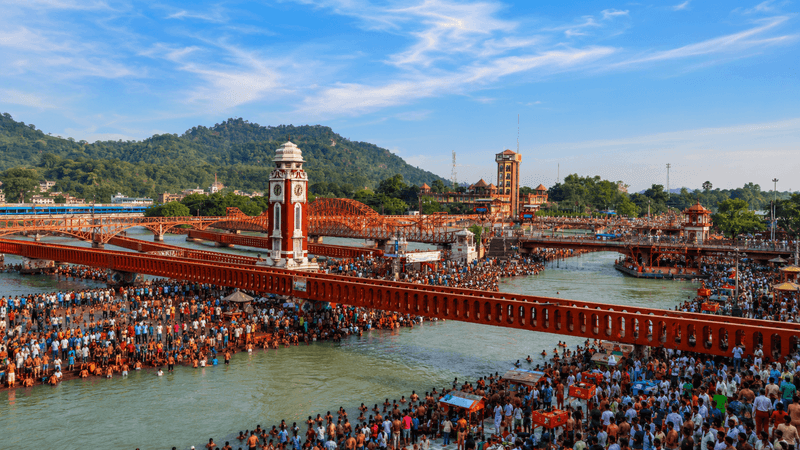
For the aartis and the ghats, stay near Ram Jhula or Triveni Ghat. For an early departure into the hills, somewhere on the main highway saves time in the morning. See verified hotels in Rishikesh, the Rishikesh destination guide, or stays in Haridwar, 25 km downstream.
Before you go
- Both main aartis, at Parmarth Niketan and Triveni Ghat, are held around sunset — arrive early.
- Check which bridges are open; the old Lakshman Jhula was closed for safety.
- Rafting stops during the monsoon, typically July into September.
- Finish registration, cash, warm clothes and medicines in Rishikesh before driving into the hills.
Good to know
- Every road to the four Char Dham shrines passes through or near Rishikesh.
- Neelkanth Mahadev marks where Shiva is said to have drunk the poison from the churning of the ocean.
- The Beatles stayed at the Maharishi Mahesh Yogi ashram in Rishikesh in the 1960s.
- Rishikesh hosts a large international yoga festival every year.
Frequently asked questions
Which aarti is better in Rishikesh, Parmarth Niketan or Triveni Ghat?
Parmarth Niketan's aarti is more organised, with singing by the ashram's students and a striking riverside setting. Triveni Ghat's is the traditional public aarti, closer in feel to Haridwar's. Both are held around sunset.
How far is Neelkanth Mahadev from Rishikesh?
About 30 km by road, around an hour each way. During the Shravan month the temple and the road are very crowded.
When is rafting closed in Rishikesh?
Rafting is suspended during the monsoon, typically from July into September, when the river is too high. It runs through the rest of the year with licensed operators.
Is Lakshman Jhula open?
The old Lakshman Jhula was closed to the public for safety reasons and a replacement bridge has been under construction. Check locally which crossings are open; Ram Jhula and the boats near it are the usual alternatives.
Should I stay in Rishikesh before the Char Dham Yatra?
A night in Rishikesh is a good start. It lets you finish registration, buy warm clothes and medicines, draw cash, and leave early the next morning, which mountain days need.
About the author
Pulp Hotels Team
Pulp Admin is the desk that runs Pulp Hotels and the verified properties on this route — Barkot, Uttarkashi, Harsil, Guptkashi, Joshimath, Badrinath and the Kedarnath valley. We deal with the owners of those hotels, and with the pilgrims staying in them, through every day of the season, and these guides are written and corrected from that work and from the official notices each season brings. Fares and opening dates change every year, so we leave them out on purpose and point you at the source instead.
Need a room on this route?
Every property on Pulp Hotels is verified before it goes live.
Related guides
- Panch Prayag: The Five River Confluences on the Road to Badrinath
Devprayag, Rudraprayag, Karnaprayag, Nandprayag and Vishnuprayag — which rivers meet at each, where they sit on the Badrinath road, and how to see them without adding days.
- Auli from Joshimath: Snow Slopes, Meadows and Nanda Devi Views
How to get from Joshimath up to Auli, what the slopes are like in winter and summer, the easy walk to Gorson Bugyal, and how to add Auli to a Badrinath trip.
- Har Ki Pauri Ganga Aarti and a Day in Haridwar: A First-Timer's Guide
When to arrive for the evening aarti at Har Ki Pauri, where to stand, and how to spend the rest of a day in Haridwar before the Char Dham road.
- Mussoorie from Dehradun: A Two-Day Plan, Landour and the Road to Yamunotri
How to get up to Mussoorie from Dehradun, what to see in two days — Mall Road, Landour, Kempty Falls — how to avoid the weekend traffic, and why Mussoorie is also a way into the Yamunotri valley.
- Do Dham Yatra: Kedarnath and Badrinath Without the Other Two
Most people who say Char Dham actually have the time for two shrines. Here is the Kedarnath-Badrinath run done properly, in six or seven days.
- A 10-Day Char Dham Itinerary, Written Around Where You Sleep
Ten days, nine nights, four shrines — planned backwards from the beds rather than forwards from the temples, which is why it holds together.