
Tungnath and Chandrashila from Chopta: The Detour Worth a Day
Tungnath is 3.5 km from Chopta, and Chandrashila 1.5 km above it. How to fit both into a Kedarnath-Badrinath trip, when to go, and where to sleep.
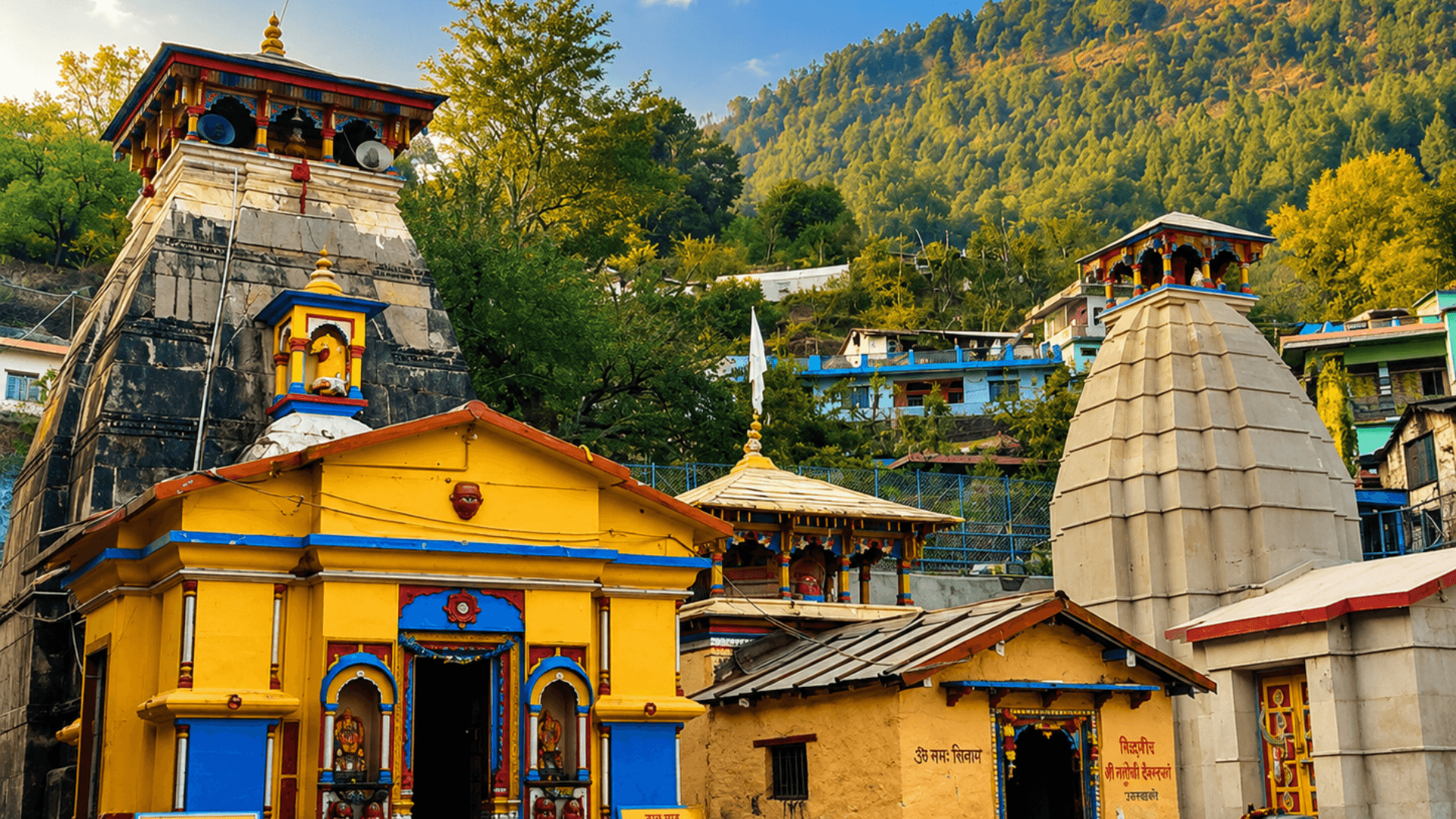
Tungnath is the highest of the five Panch Kedar temples and is counted as the highest Shiva temple in the world, at about 3,680 m. It is also one of the easiest high shrines in Garhwal to reach: a 3.5 km paved path from the meadow at Chopta. Another 1.5 km of steep climbing above the temple brings you to Chandrashila, a summit close to 4,000 m with one of the widest Himalayan views anywhere near the Char Dham route.
What makes it worth planning for is where it sits. Chopta lies on the road between the Kedarnath and Badrinath valleys — the same road a Do Dham yatra uses on its transfer day. With one extra night, the transfer becomes a pilgrimage of its own.
Getting to Chopta
From Guptkashi, cross the Mandakini to Ukhimath and climb through forest to Chopta — about 45 to 50 km, roughly two hours. Ukhimath is worth a stop: its Omkareshwar temple is where Kedarnath's deity spends the winter. Beyond Chopta the road drops to Chamoli on the Alaknanda, where you turn north for Joshimath and Badrinath.
The walk
Chopta to Tungnath — about 3.5 km
The path starts from the roadside at Chopta and is paved all the way to the temple. It climbs through rhododendron and oak into open bugyal meadow, steadily rather than brutally. Most walkers take one and a half to two and a half hours up. Ponies are available at Chopta for those who need them.
Tungnath to Chandrashila — about 1.5 km
Above the temple the path turns rough and steep. It is short, but it is the hardest part of the day, and early and late in the season it can hold snow and ice. Allow about an hour up. From the top the view runs along the main Himalayan range — Nanda Devi, Trishul, Kedarnath and Chaukhamba are among the peaks you can pick out on a clear morning.
For the view, you want to be up early. Cloud usually builds from late morning, and by midday the peaks have often gone. That is why many people sleep at Chopta and start in the dark to reach Chandrashila for sunrise.
The temple
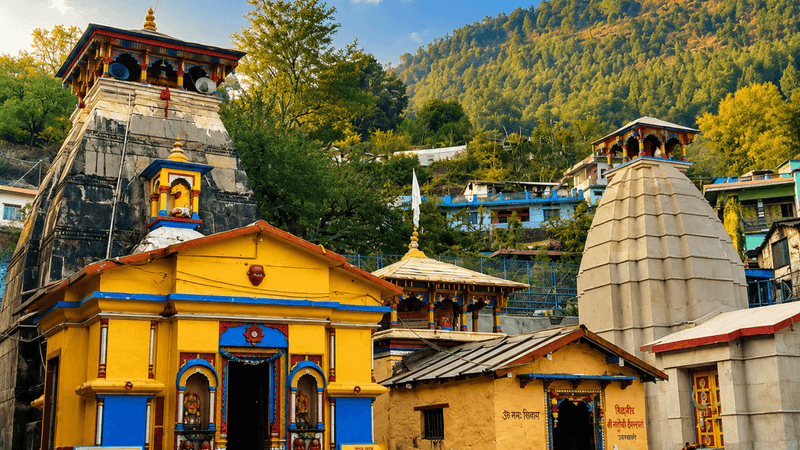
In the Panch Kedar story, Shiva evaded the Pandavas in the form of a bull after the Mahabharata war, and parts of him reappeared at five places in Garhwal. At Tungnath it is the arms. The temple is small, built of stone and very old, and the setting does most of the work. Like Kedarnath it closes for winter, when the deity is taken down to Makkumath.
Fitting it into a Do Dham trip
The simplest version adds one night:
- Come down from Kedarnath to Guptkashi as usual, and rest.
- Drive to Chopta and walk to Tungnath, sleeping at Chopta if you want Chandrashila at sunrise, or returning to the road the same afternoon.
- Continue to Joshimath for Badrinath the next day.
Chopta has simple camps and lodges rather than hotels. If you want a proper bed, sleep in Guptkashi and leave early enough to be on the path by eight; you miss sunrise but usually still get the morning view.
Do not try to fit Tungnath into the day after the Kedarnath trek unless your legs genuinely feel fine. Most people's do not, and the Chandrashila section is the wrong place to find out. Our Guptkashi and Kedarnath guide covers that first half of the trip.
When to go
The temple is open from roughly May to early November. May and June bring rhododendron in flower and long days; September and October, after the monsoon, bring the clearest views. Our month-by-month guide covers the rest of the circuit. In winter Chopta is snowbound and popular with snow trekkers, but the temple is closed and the road can shut after heavy snowfall.
Before you go
- Chopta to Tungnath is about 3.5 km on a paved path; Chandrashila is a further 1.5 km, steep and rough.
- Start early — cloud usually covers the peaks by late morning.
- Sleep in Guptkashi for a proper bed, or at Chopta's simpler camps for sunrise.
- The temple closes in winter, when the deity moves to Makkumath.
Good to know
- At about 3,680 m, Tungnath is counted as the highest Shiva temple in the world.
- Tungnath is one of the five Panch Kedar temples; the others are Kedarnath, Madhyamaheshwar, Rudranath and Kalpeshwar.
- Ukhimath's Omkareshwar temple, on the road to Chopta, is Kedarnath's winter seat.
- The high meadows around Chopta are bugyals, grazed in summer and buried in snow in winter.
Frequently asked questions
How far is Tungnath from Chopta?
About 3.5 km on a paved path. Most walkers take one and a half to two and a half hours to reach the temple, and ponies are available at Chopta.
How far is Chandrashila from Tungnath?
About 1.5 km, but it is steep and rough, and can hold snow early and late in the season. Allow around an hour up from the temple, and go early for the clearest view.
How do I get to Chopta from Guptkashi?
Cross the Mandakini to Ukhimath and follow the road up to Chopta — about 45 to 50 km, roughly two hours. From Chopta the road continues to Chamoli and on to Joshimath and Badrinath.
When is Tungnath temple open?
From roughly May to early November. In winter the temple closes and the deity is taken down to Makkumath. Chopta itself is reachable in winter, but snow can close the road.
Can I visit Tungnath the day after Kedarnath?
It is possible but rarely wise. Most people's legs need a day after the 16 km Kedarnath trek. Rest in Guptkashi, then do Tungnath the following day on the way to Joshimath.
Need a room on this route?
Every property on Pulp Hotels is verified before it goes live.